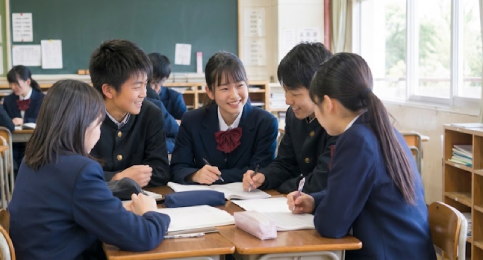
THE JAPANESE APPROACH TO DEVELOPING STUDENTS’ SOCIAL SKILLS
Practical Ideas for the Bulgarian Classroom
lecturer Dr Stefania Dimitrova
Because good education does not prepare children for exams alone – it prepares them for living and working together.How do Japanese schools nurture not only knowledgeable students, but also responsible, empathetic young people who know how to work together?
In Japan, education goes beyond the acquisition of knowledge. It is also a process of developing character, a sense of belonging to a community, respect for others, and the ability to cooperate.Students learn to take responsibility, follow shared rules, care for their school environment, solve problems together, and consider the needs of others.
-
The Japanese model of social learning – how everyday school practices foster responsibility, independence, and mutual support.
-
The classroom as a community – approaches to creating an atmosphere of trust, belonging, and mutual respect.
-
Learning through cooperation – practical ideas for developing teamwork, dialogue, and shared responsibility.
-
Emotional and social intelligence – helping students understand others, manage conflicts, and develop empathy.
-
Japanese practices for Bulgarian schools – how to adapt successful ideas to our educational context without mechanically copying a foreign model.
New perspectives on the teacher’s role in students’ personal and social development, practical ideas for classroom management, and effective strategies for building a positive school community.
The seminar draws on an understanding of Japanese educational culture and emphasizes the connection between theory and everyday teaching practice.
Organized by: The Centre for International Research in Education and Culture (CIREC) at the Madara-Bulgaria Foundation, in partnership with Sofia University “St. Kliment Ohridski”.